


This week we read the first half of Paradise Lost book 1, stopping after line 330, “Awake, arise, or be forever fall’n”
Outline
Here’s an outline of what this passage covers:
1–26: Opening invocation:
27–49: The whole subject, in brief
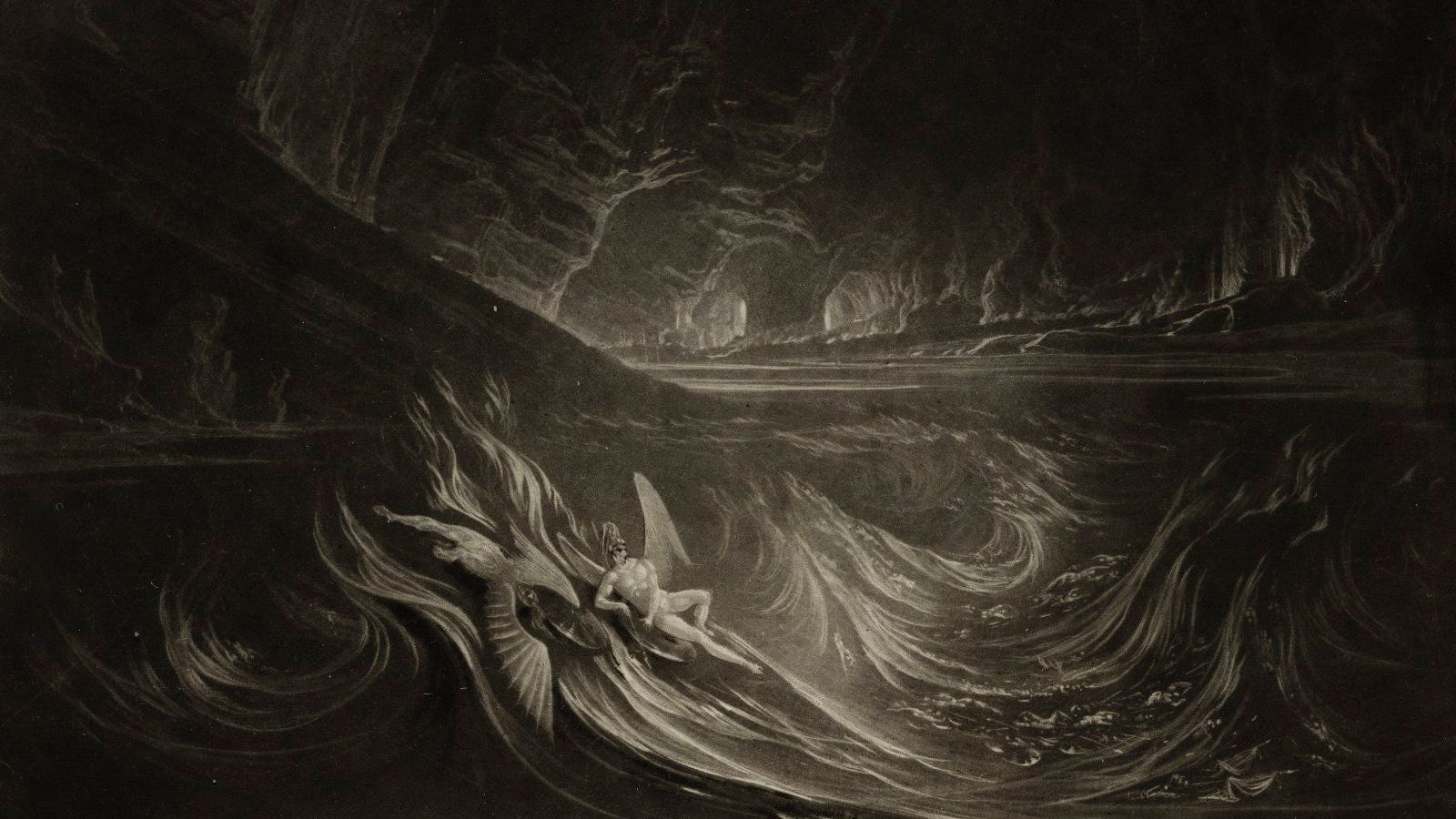
50–83: Description of the fiery lake, and who lies there
84–126: Satan’s first speech to Beelzebub, “If thou be'st he”
127–155 : Beelzebub-the-buttkisser’s first speech to Satan, “O prince, O chief”
156–192: Satan’s second speech to Beelzebub, “Fallen cherub”
193–241: Their glorious(?) rise, and the role of Providence
242–271a: Satan’s third speech to Beelzebub: “Is this the region?”
271b–282: Beelzebub-the-buttkisser’s second speech to Satan: “Leader of those armies bright”
283–330: Satan’s beholds his armies and rhetorical taunt, “Princes, potentates”
Deep Dive Video
From time to time, I’ll record a deep dive video, where I walk through a shorter passage in a bit more depth. This time I went with the opening prayer (Book 1, lines 1-26).
Gently guided reading
If you want a little guidance before each section you read, here are some things to pay attention to in each section.
1–26: Pay attention to the Biblical allusions. How many do you notice?
27–83: Where do you, as the reader, sit in time and space? How many times does your point of view change? Notice the effect this has on you.
84–192: In this first exchange between Satan and Beelzebub, pay attention to the way Satan uses his rhetoric on his partner. Also notice the poet’s occasional interruptions. Do they seem predictable or jarring?
193–241: Pay attention to the images, similes, metaphors in this portion. Notice the relationship between what the poet shows (describes) and what he says (explains).
242–330: How do you find yourself responding to Satan’s rhetoric? Do you find his words stirring? Persuasive?
Discussion questions
In the opening invocation, Milton sets out to “assert Eternal Providence, / And justifie the wayes of God to men” (25–26). What qualifies him to do so? Is this something Christians ought to attempt? How does his subject matter allow him to attempt this?
What does the poetic voice say about the motivations of Satan in 34–40. How does this opening argument situation the relationship between the two falls: the fall of mankind and the fall of Satan?
How does the opening situation mingle both sympathetic and condemnatory descriptions (53–58, 70–75) of the punishment of the fallen angels. What are we meant to feel? How does the description of this situation affect you?
What do Satan’s first words in the poem reveal to us about his character? Is he sympathetic toward Beelzebub? Do you find his rhetoric compelling at any point? What is his complaint toward God? Is it reasonable?
In 125–26 we encounter the first of many poetic corrections. Milton takes us aside and tells us how we are to interpret the previous soliloquy. Some interpreters think this is an example of Milton being clumsy, or showing his weakness as a poet. Did he simply get carried away with Satan’s voice, and realize it too late? Would the meaning of the poem be different without these correctives?
What do we learn of Beelzebub in his speech (esp. 143–147)? What motivates him? How is he like and unlike Satan?
I think 162–68 is one of the most revealing confessions of Satan as to his real motivations (see also 186–88). What do you make of this confession?
Lines 209–220 form a key passage in book 1. How do these comments relate to the Great Argument. Why do you think the poet includes this passage wedged right in between the descriptions before and after? Compare the poetic theological statement with the characters action in 238–241.
Is Satan’s inflexibility (252–256) heroic? How does this description compare with other great heroes in literature? See the famous line in 263: “Better to reign in Hell, then serve in Heav’n”. Why do you think this has been the rallying cry of the Satanic readership?
I think lines 283–315 are some of Milton’s finest writing in Book 1. It’s powerfully evocative. How does it make you feel? How is the poetry working here? Why all these compounding descriptions?
From 315–30, do you find Satan’s speech to his armies seems quite changed in tone than what we’ve seen when he is talking to Beelzebub? How so?
Sign up to read with us!
Note: we’ve had 2 spots open up in the current Sunday evening group. If you are interested, do be in touch. A few people have asked about starting another live reading group on a different evening. If you’re at all interested, sign up on the waitlist to be contacted about the next reading group.