


In the first half of book 1, we saw Milton’s opening prayer and a brief summary of the whole story of the fall, and then interloped on a series of conversations between Satan and Beelzebub. This week we finish book 1, where we will meet the rest of the fallen angels, learn about their chiefs and generals, see more descriptions of Satan’s dark majesty. We also get a brief preview of how Satan plans to revenge himself on the Almighty by invading a new world and race, rumored to be created soon.
As we finish book 1, consider how Milton’s descriptions of the fallen angels here are an attempt to teach his readers about the nature and character of their spiritual enemies. Recall Paul’s reminder in Ephesians 6:12, “For we wrestle not against flesh and blood, but against principalities, against powers, against the rulers of the darkness of this world, against spiritual wickedness in high places.” Our reading of Paradise Lost this week serves as an extended elaboration on the apostle’s commentary on the nature of spiritual warfare. Milton wants you to know your enemy. (Raging against the machine optional, but encouraged.)
Outline
Here’s my outline of what we’ll encounter in the second half of book 1:
331–391: The fallen angels arise and swarm onto the field; their chiefs come forward, described in general
392–521: The nine chief demons introduced: Moloch, Chemos, the general Canaanite gods (the Baalim and Ashteroth), Astarte, Tammuz, Dagon, Rimmon, the Egyptian gods, and Belial. (Honorable mention of the lesser Olympian gods)
522–573: Satan beholds his crew and briefly doubts, then musters his troops
573–621: Satan’s diminishing glory described; he prepares to speak.
622–660: First speech of Satan to the gathered armies of Hell, and their response
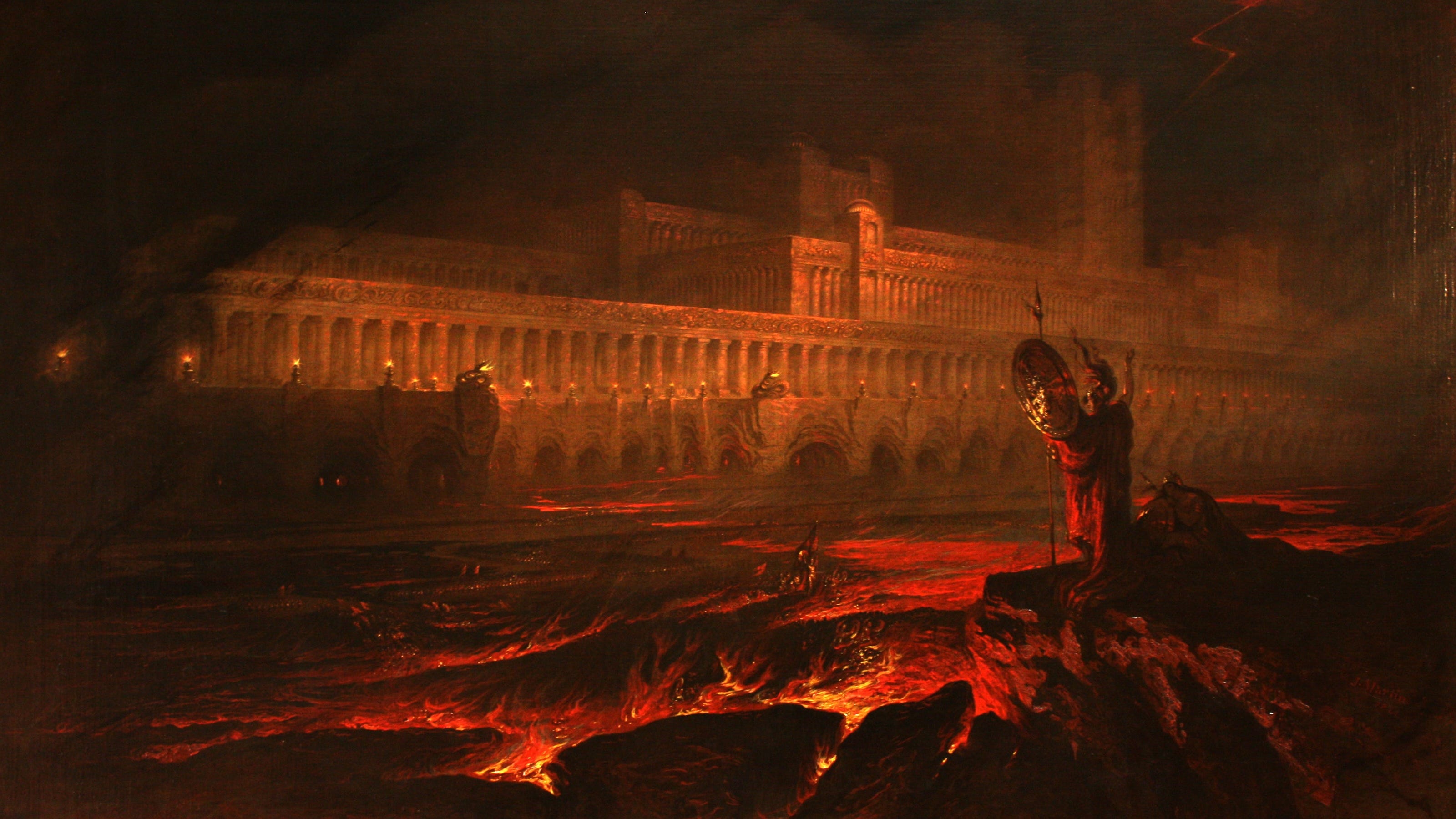
670–751: Mammon leads the construction of Pandemonium
752–798: The synod of Hell summoned
Deep Dive
In my second Deep Dive video, I look at Mammon, the demonic spiritual father of Big Tech, AI, and Virtual Reality.
Gently Guided Reading
Here are some things to pay attention to as you read each section
331–391: Pay attention to the kinds of metaphors and images Milton uses to describe the fallen angels. What does this evoke?
392–521: This is a long section with a lot of seemingly arcane detail. Rather than get bogged down in the many place names, consider how experiencing these descriptions in time is meant to affect you as a reader.
522–573: Does this passage change your view of Satan at all? Does it cause you to doubt the impression you have built from earlier in book 1?
573–621: Consider what the description here means to you as reader, a human of the race of Adam and Eve. How is Milton playing upon your imagination?
622–660: What does Satan’s speech to his assembled armies tell you about not only his plans, but his methods?
670–751: As we first encounter the character Mammon, notice how his work has echoes throughout human history, and how Milton is commenting on mankind as much as on fallen spirits.
752–798: Once again, make note of the metaphors, similes, and images. What does this evoke?
We’re a new community. Do you know someone else who would like resource for Paradise Lost?
Discussion Questions
In lines 358–75, how does Milton describe the role of fallen angels in human history, and how does this relate to his Great Argument about the sovereignty and goodness of God? How does this advance his cause? Do you find it persuasive?
Of the 9 chief demons, did any stand out to you as particularly noteworthy? How do the descriptions influence your view of these characters?
In 326-7 there seems to be a brief hesitation or sympathy on Satan’s part, as in 600–20. Does this exonerate him? Is Milton siding with the devil unawares? What do you make of this description?
In Satan’s speech 622–62, what different motivations or rationales for his scheme does Satan provide? What can we learn about him from his rhetoric?
What can you learn about Mammon from 670–751? What has his unique role in human history been, according to the poet?
Considering all that imagery and description throughout book 1, how does the ending of the book shift the tone? Given all the grandeur and hugeness, why might Milton close book 1 by shrinking everything down to miniature? How does this change in perspective affect you?